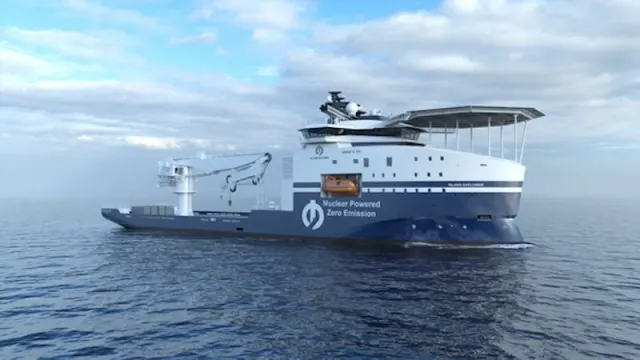
Norway is progressing toward testing nuclear propulsion for commercial vessels through the Marine Nuclear Propulsion System (MarNuPS) project, which secured NOK 20 million ($2 million) in government funding from the Research Council of Norway. Led by Emerald Nuclear Norway alongside shipbuilder VARD and vessel operator Island Offshore, the pilot aims to deploy its first nuclear-powered offshore service vessel by 2031 or 2032. The initial testing phase in 2027 at Stette will use electric heating to simulate thermal output before active nuclear operation. Emerald Nuclear proposes a leasing model where it retains ownership of the GEM Microreactor and fuel cycle, while operators pay for consumed power.
Meanwhile, South Korean shipbuilder Samsung Heavy Industries and U.S. technology firm Tesser Atomics signed an exclusive agreement to develop a nuclear-powered LNG carrier for transatlantic routes between the United States and Europe. The project utilizes Tesser's Triton reactor, a compact fluoride-salt-cooled high-temperature system featuring TRISO fuel and molten salt coolant. According to gCaptain, the initiative follows earlier Norwegian NuProShip research and ties into the SFI SAINT consortium involving Knutsen OAS.
Despite these developments, significant hurdles remain regarding reactor licensing, maritime safety, port access, insurance, and crew training. The International Maritime Organization is targeting 2030 to adopt a revised Nuclear Code and amendments to SOLAS Chapter VIII. Additionally, an ABS-supported study noted that a nuclear-powered LNG carrier could cost roughly 2.5 times more to build than a conventional vessel.